
Tornado or Storm Damage in Central Arkansas: A 48-Hour Checklist
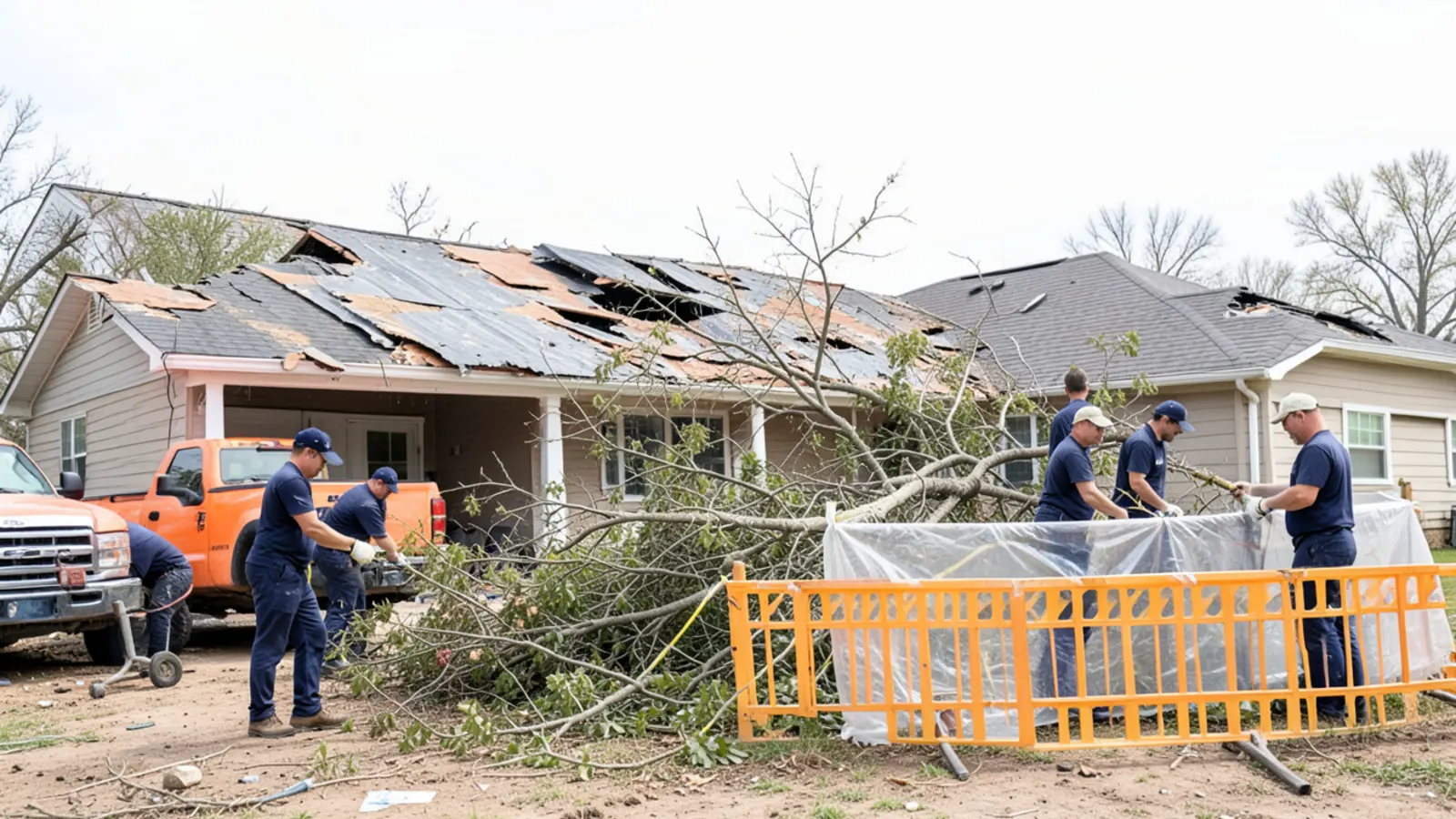
Following severe storms or tornadoes in Central Arkansas, your immediate 48-hour plan must focus on verifying personal safety, shutting off damaged utilities, securing emergency roof tarping and window board-up to prevent secondary rain intrusion, photographing all damage room-by-room, and calling an emergency restoration professional to begin water extraction.
Hours 0–6: Structural Safety, Downed Lines, and Utility Shutoffs
Immediately following the passage of a tornado or severe supercell, your first priority is physical safety. Check for the smell of natural gas; if you detect sulfur or hissing sounds, evacuate immediately and notify CenterPoint Energy or your local utility from a safe distance. Beware of downed power lines hidden in wet yard debris. If safe to do so, turn off your home’s electrical main and municipal water supply. Avoid climbing onto damaged roofs or entering rooms where ceilings are visibly sagging under water weight.
Get Connected with a Local Contractor
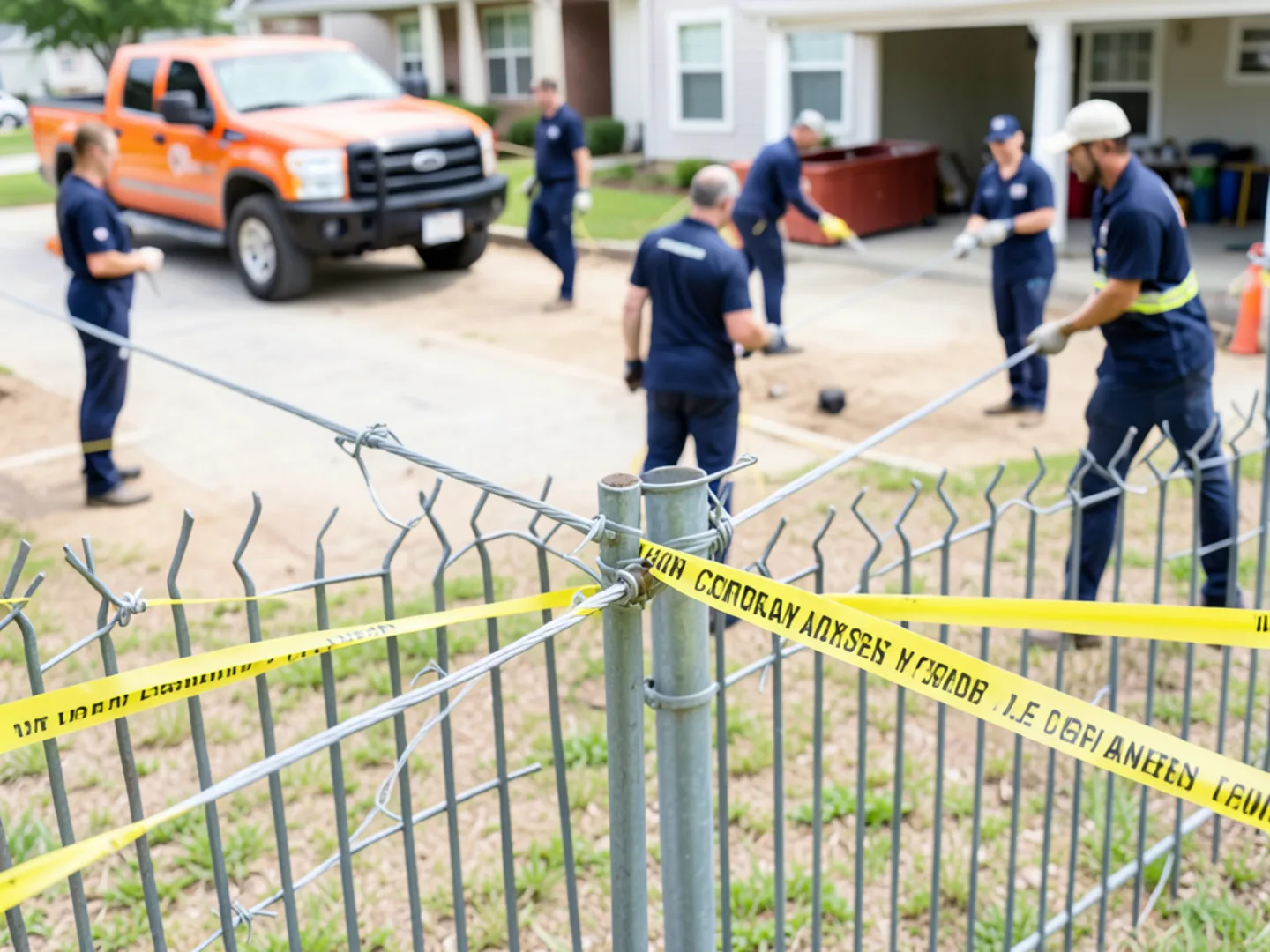
Dispatch operates 24/7 across Little Rock, North Little Rock, Sherwood, Maumelle, Bryant, Benton, Conway, and Jacksonville.
Hours 6–12: Securing Emergency Roof Tarping and Window Board-Up
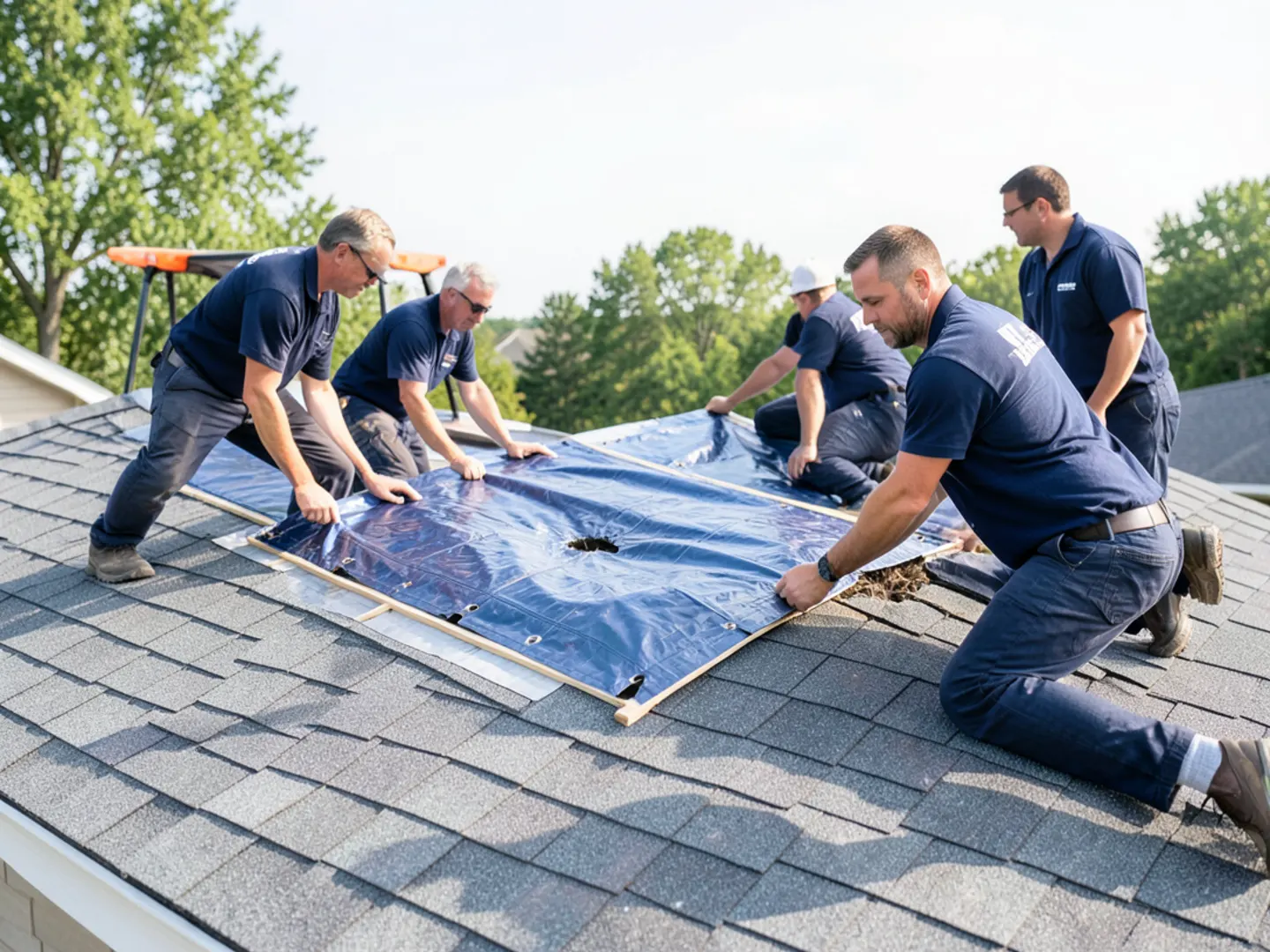
Secondary water damage is often the costliest consequence of an Arkansas storm. When tornadoes or straight-line winds lift asphalt shingles or drop tree limbs through roof decking, subsequent rain pours into attics, saturating blown-in insulation and collapsing drywall ceilings. Standard homeowners insurance policies require homeowners to take reasonable steps to prevent further damage. Call (702) 478-1007 to dispatch local professionals who can securely batten heavy-duty waterproof tarps across breached decking using wooden furring strips and cover shattered windows with structural plywood.
Hours 12–24: Comprehensive Photo & Video Inventory for Adjusters
Before cleanup begins, compile a meticulous room-by-room photo and video inventory. Start outside: capture the overall structure, fallen tree impacts, missing shingle fields, dented gutters, and siding fractures. Inside, photograph ceiling water stains, sagging drywall, wet flooring, baseboard swelling, and all damaged personal property including electronics, furniture, and appliances. Record serial numbers and model tags where visible.
Hours 24–48: Bulk Water Extraction and Removing Wet Insulation
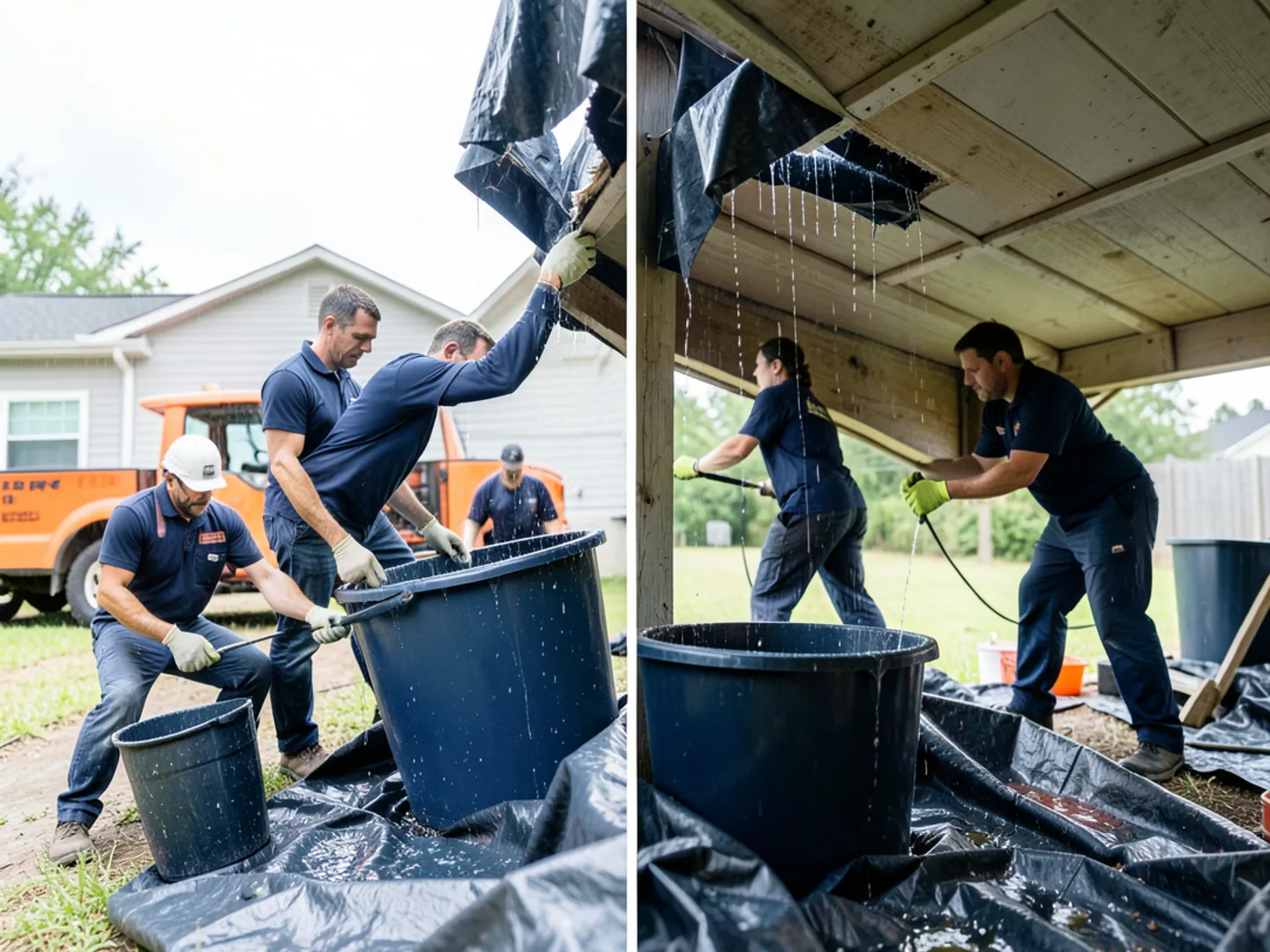
Wet blown-in cellulose or fiberglass attic insulation cannot be dried in place; it compresses into a sodden mat that traps moisture and fosters mold within 24 to 48 hours. Professional crews use industrial vacuum hoses to extract saturated attic insulation and truck-mounted wands to pull standing rainwater from living room flooring. Commercial LGR dehumidifiers and high-velocity air movers are staged to bring structural lumber and drywall down to safe baseline moisture standards.
Navigating the First Adjuster Visit: Proof of Loss and Scope Approval
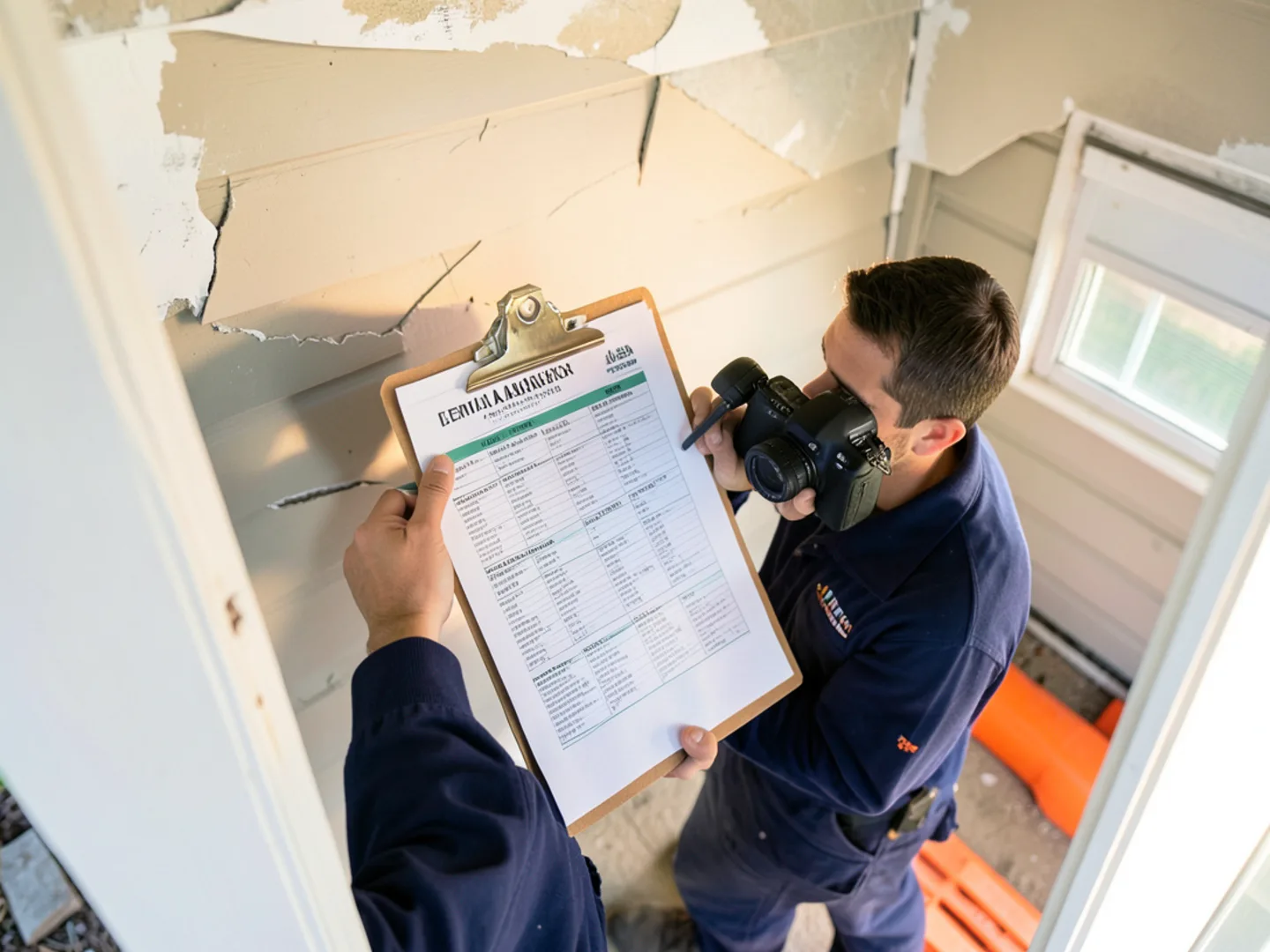
When your insurance carrier assigns an adjuster to inspect storm damage, preparation dictates your claim outcome. Have your room-by-room photo and video inventory printed or ready on a tablet. Walk the adjuster through the property, pointing out not just obvious roof damage, but subtle signs of structural water intrusion: hairline ceiling fractures, water marks inside upper cabinetry, damp carpet padding, and electrical fixtures that were exposed to rain. Request a copy of the adjuster’s preliminary scope of loss before they leave. Professional restoration contractors provide drying logs, thermal imaging scans, and itemized Xactimate estimates that serve as undeniable factual proof of the water migration path, ensuring the carrier approves adequate funds for complete structural remediation.
Emergency Board-Up and Structural Stabilization Protocols
In severe storms across Central Arkansas, broken windows and fractured entry doors leave properties vulnerable to rain damage, looting, and animal intrusion. Standard recovery protocol requires immediate emergency board-up. Contractors use minimum 5/8-inch exterior-grade plywood cut to fit window and door openings tightly. Plywood is secured to framing studs using exterior screws or carriage bolts with backing plates, avoiding damage to undamaged window frames. For roof decking punctures caused by falling oak branches, crews install temporary 2x4 framing stiffeners beneath damaged trusses before securing 15-mil woven polyethylene tarps. Furring strips are screwed into structural rafters every 24 inches to prevent high winds from tearing the tarp free during subsequent storms.
48-Hour Post-Storm Recovery Milestone Matrix
| Time Window | Action Step | Key Objective | Insurance Relevance |
|---|---|---|---|
| Hours 0–6 | Utility check & evacuation if compromised | Prevent fire, electrocution, and gas leaks | Required for safety clearance |
| Hours 6–12 | Install battened roof tarp & board-up | Stop rainwater from destroying home interior | Fulfills policy "duty to mitigate" |
| Hours 12–24 | Complete room-by-room photo inventory | Document damage before cleanup alters evidence | Essential proof for adjuster scope |
| Hours 24–48 | Extract water & vacuum soaked insulation | Prevent mold growth within EPA 48-hr window | Mitigation estimate separated from repairs |
Professional Contractor Perspective
The March 31, 2023 EF3 tornado demonstrated that water damage is the primary secondary catastrophe following severe wind events. As the storm tracked 34 miles across West Little Rock, North Little Rock, Sherwood, and Jacksonville, hundreds of homes that suffered partial roof breaches were inundated by intense subsequent rainfall. Property owners who secured professional tarping and water extraction within the first 24 hours saved tens of thousands of dollars in structural framing and interior finishes compared to those who waited for an insurance adjuster inspection before acting.
In accordance with our editorial standards, our informational guides and process breakdowns are grounded in verifiable documentation from state licensing boards, municipal utility codes, and official meteorological data:
- 1.National Weather Service Little Rock — Storm damage assessment reports.
- 2.Arkansas Insurance Department — Severe weather claims guide for property owners.
- 3.Arkansas Contractors Licensing Board — Verification portal for licensed contractors.